 Where to find us?
 Loyalty program
 Contact us






- Key takeaways
- What is niacinamide?
- What are the benefits of niacinamide for the face?
- Is niacinamide suitable for all skin types?
- What concentration of niacinamide should you choose?
- How to incorporate niacinamide into your routine?
- Which actives to combine niacinamide with?
- Are there any precautions to take?
- Niacinamide at Garancia
Midday shine, sudden redness, persistent dark spots, enlarged pores. These signs have different causes, yet the same active ingredient appears repeatedly in the advice given for each of them.
Niacinamide has become the jack-of-all-trades ingredient in skincare. Here is what it really does and how to use it without making mistakes.
Key takeaways
- Niacinamide is a form of vitamin B3, also known as nicotinamide or vitamin PP.
- It works on six areas: the skin barrier, sebum, the appearance of pores, redness, dark spots, and signs of aging.
- It is suitable for all skin types, including sensitive skin, which sets it apart from most high-performance actives.
- 2 to 5% is sufficient in most formulations. Above 10%, the risk of tingling increases without a proportional benefit.
- It can be used morning and evening and can be combined with almost all other actives, including vitamin C.
What is niacinamide?
Niacinamide is the amide form of vitamin B3, a water-soluble vitamin that the human body does not store. You will come across it under several names: nicotinamide in scientific literature, vitamin PP in older texts, and niacinamide on the INCI lists of your skincare products.
This latter name, PP, comes from the English Pellagra Preventing. Vitamin B3 was first identified for its role in preventing pellagra, a deficiency disease. Its cosmetic use came much later.
Niacinamide and niacin are not the same thing
This is the most common confusion, and it explains a lot of rumors. Niacin, or nicotinic acid, is the other form of vitamin B3. It causes vasodilation and therefore hot flashes, that famous flush effect. Niacinamide, on the other hand, does not produce this effect. If you read somewhere that a vitamin B3 treatment makes you flush, it is niacin, not niacinamide.
What are the benefits of niacinamide for the face?
Its particularity is that it is not limited to a single action. Here are the six areas in which it acts, from the best documented to the most gradual.
- It strengthens the skin barrier. This is its foundational action, from which most of the others stem. Niacinamide supports the production of ceramides, the lipids that ensure the tightness of the stratum corneum. A strong barrier allows less water to evaporate and better withstands external aggressions.
- It regulates sebum and refines the appearance of pores. Skin that produces less excess sebum shines less, and its pores appear less dilated. This is the benefit that made the active famous among combination to oily skin.
- It soothes redness. By strengthening the barrier and acting on microcirculation, it helps limit diffuse redness and the discomfort of reactive skin. This is why it is found in many soothing anti-redness treatments.
- It reduces the appearance of dark spots. This is its best scientifically explained benefit. A study published in the British Journal of Dermatology in 2002 showed that niacinamide reduces the transfer of melanosomes, the small pigment sacs, from melanocytes to surface cells. In other words, the pigment is made but it rises less to the surface. This is why it is featured in most dark spot treatments, often combined with other correcting actives.
- It acts on wrinkles and firmness. A more gradual effect, linked to supporting the synthesis of the skin's structural proteins. The skin appears more toned, the texture smoother. Allow several weeks.
- It protects against oxidative stress. Its antioxidant action helps the skin better resist pollution and UV rays, two factors that accelerate skin aging.
Is niacinamide suitable for all skin types?
Yes, and that is precisely what makes it a unique active. High-performance ingredients are often selective: retinol requires an adaptation period, exfoliating acids are poorly tolerated by thin skin. Niacinamide, on the other hand, is well tolerated by the vast majority of skin types.
| Skin type | Desired benefit |
|---|---|
| Combination to oily | Fast benefit on shine and imperfections |
| Sensitive | Comfort rather than irritation |
| Dry | Skin barrier reinforcement, limits water loss |
| Mature | Dark spots, skin texture and firmness |
What concentration of niacinamide should you choose?
The race for a high percentage is a false lead.
| Concentration | What it targets |
|---|---|
| 2 to 5% | Covers the majority of expected benefits; range selected in most studies |
| 5 to 10% | More pronounced action on dark spots and sebum, on skin already accustomed |
| Above 10% | The benefit/tolerance ratio deteriorates: more frequent tingling and redness, without proportional gain |
With this active as with the others, the quality of the complete formula matters more than the number displayed on the bottle.
How to incorporate niacinamide into your routine?
Morning, evening, or both. Unlike retinol, which is reserved for the evening, niacinamide has no time constraint.
The order remains that of any routine: from the most fluid to the richest. Cleaned skin, serum, cream, then face sunscreen in the morning. This last step is not optional if your concern is dark spots: without it, the pigment reactivates faster than the active can correct it.
Allow four weeks for the first effects on comfort and shine, eight to twelve weeks for dark spots and skin texture.
Which actives to combine niacinamide with?
It is one of the easiest actives to combine, contrary to what is still read.
Niacinamide and vitamin C, the false problem
The idea that they should not be mixed comes from old observations, conducted on unstable and heated solutions, in which niacinamide could partially transform into niacin. Today's cosmetic formulations have nothing to do with that. The two actives coexist without difficulty, and if your skin is very reactive, it is still possible to alternate: vitamin C in the morning, niacinamide in the evening.
Niacinamide and retinol, the most interesting combination
This is the duo that makes the most sense. Retinol accelerates cell renewal but can irritate. Niacinamide strengthens the skin barrier and improves tolerance. One does the foundational work, the other protects the skin. Many modern dark spot treatments are based on this logic.
Niacinamide, hyaluronic acid and exfoliating acids
With hyaluronic acid, no precautions: one hydrates, the other strengthens, the two complement each other. With AHA and BHA, it is better to space them out during the day rather than layer them, not because of chemical incompatibility, but for comfort.
Are there any precautions to take?
Few, but there are some. On very reactive skin, a high concentration can cause temporary tingling: start low and space out applications the first week. An elbow crease test remains the simplest reflex before first use.
A cosmetic treatment is not a medical treatment. In case of persistent redness or a reaction that develops, stop application and ask for a dermatologist's advice.
Niacinamide at Garancia
Two treatments from the Éclair de Lune range rely on this active, and each combines it differently.
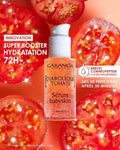
The Éclair de Lune L'Absolu serum combines niacinamide with hyaluronic acid and a patented active, in a complex that targets the different stages of dark spots. It is applied morning and evening to the face, neck, and décolletage, alone or under your usual treatment, in a three-month course.
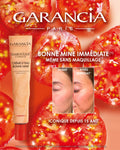
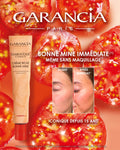
The Éclair de Lune La Foudroyante cream combines niacinamide with an Advanced Retinol-Like derived from a micro-algae, gentler on the skin than retinol. It is exactly the duo described above: a renewal active on one side, a tolerance and correction active on the other. It acts on three signs at once: dark spots, wrinkles, and complexion radiance.
Don't know which one to start with? Our online skin diagnostic guides you in a few questions. And signing up for the newsletter gives you 10% off your first order.


